August 11, 2026
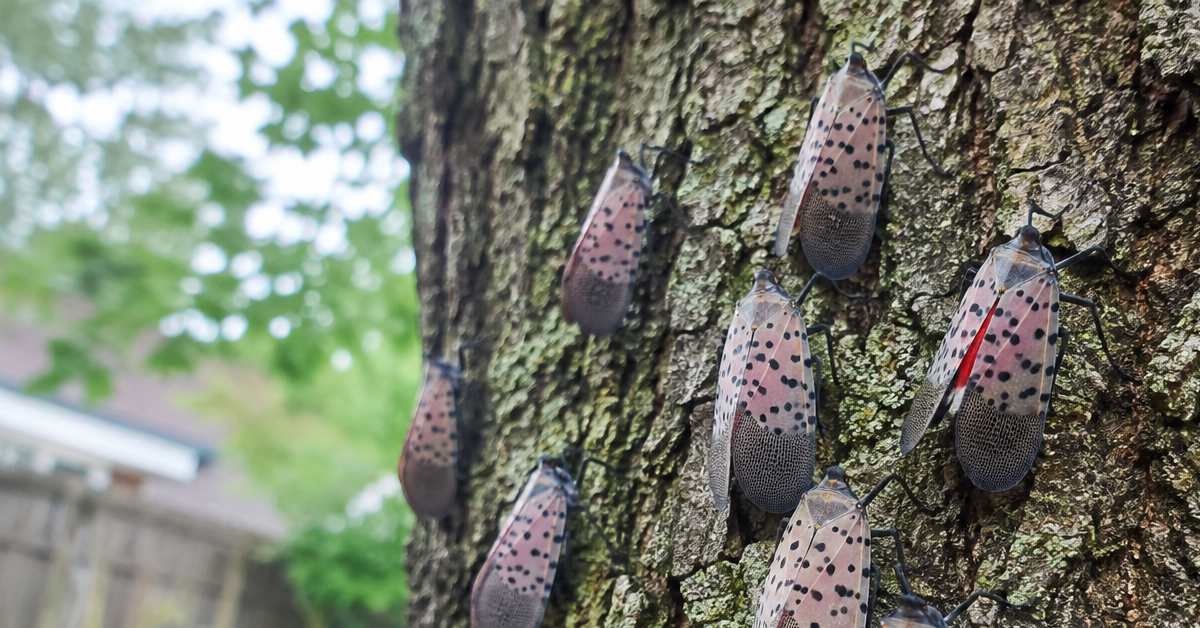
By late summer, a lot of Ambler yards look the same: a tree trunk covered in gray, spotted moths, sticky residue on the patio furniture underneath, and a homeowner wondering if the tree is about to die. Spotted lanternfly has been established in southeastern Pennsylvania since 2014, and Montgomery County is squarely in the middle of it.
Key Takeaways
- Spotted lanternfly is mostly a stressor, not a direct killer, for healthy established trees, though grapevines, tree-of-heaven, and black walnut saplings are more vulnerable.
- Honeydew and the sooty mold it causes reduce a tree’s ability to photosynthesize, which compounds over a season.
- Treating a small number of tree-of-heaven as “trap trees” can be more effective than removing every host on the property.
- Sticky trunk bands are outdated advice due to wildlife bycatch; circle traps are the current recommendation.
- Black walnut and maple deserve closer monitoring, since they’re more prone to dieback under sustained feeding pressure.
This article covers what’s actually happening when lanternfly shows up on your property, why the standard DIY advice is often outdated or counterproductive, and how a targeted treatment plan protects your trees without wasting effort on the wrong fixes.
Is Spotted Lanternfly Going to Kill My Tree?
In most cases, no. Spotted lanternfly is a plant stressor rather than a direct killer for healthy, established trees, though it has been documented to kill grapevines, tree-of-heaven, and black walnut saplings, and it can weaken already-stressed trees over time. That distinction matters, because it changes the goal of treatment from “save a dying tree” to “reduce feeding pressure before it compounds with other stress.”
The Damage You Don’t Immediately Notice
Most homeowners focus on the lanternflies themselves, the sheer number of them, the way they cover a trunk by August. The damage that actually affects your landscape is often something else entirely.
As lanternfly feed in large numbers, they excrete a sticky substance called honeydew, and it doesn’t stay contained to the tree. It coats leaves, patio furniture, cars, and anything else underneath the canopy. Left alone, that honeydew grows a black fungal coating called sooty mold, which reduces how much light the leaves underneath can actually absorb for photosynthesis. The lanternflies feeding on the tree are the visible problem. The sooty mold quietly reducing the tree’s energy production is the one that compounds over a season.
The Counterintuitive Strategy: Keeping the Tree Lanternfly Loves Most
Here’s something that surprises almost every homeowner we explain it to: the most effective way to reduce lanternfly pressure on a property sometimes involves keeping, not removing, a tree.
Tree-of-heaven, an invasive species itself, is lanternfly’s preferred host. Penn State Extension’s ecosystem research explains that state and regional programs often treat a small number of female tree-of-heaven with systemic insecticide and leave them standing as “trap trees,” using the tree’s own draw to concentrate and kill lanternfly that would otherwise spread across the rest of the property. Removing every tree-of-heaven on a property sounds like the obvious move, but it can actually push lanternfly onto your maples, oaks, and other landscape trees instead of concentrating them somewhere treatable.
Why We Don’t Recommend Sticky Bands Anymore
A few years ago, wrapping trunks in sticky tape bands was common DIY advice for catching lanternfly nymphs as they climbed. That advice has aged poorly.
Sticky bands catch more than lanternfly. Birds, squirrels, and other beneficial insects get caught in the same adhesive, and the bycatch problem became significant enough that Penn State Extension’s management guide now points homeowners toward circle traps instead, mesh funnel traps that intercept climbing nymphs without an exposed adhesive surface. It’s a small equipment change, but it reflects how much lanternfly management has shifted since 2014 as more data has come in.
What We See on Ambler Properties
Black walnut and maple are two of the species we watch most closely on local jobs, since Penn State’s research has specifically flagged them among the hosts most likely to show branch dieback and decline under sustained lanternfly pressure, even though outright tree death from lanternfly alone remains rare. A mature black walnut that’s already dealing with drought stress or root competition handles a heavy lanternfly season very differently than the same tree in good health.
Lanternfly Life Stages and What to Do About Each
| Life Stage | Timing | Recommended Action |
| Egg Masses | September through June | Scrape and destroy egg masses. Check trees, firewood, and outdoor furniture. |
| Early Nymphs (Black with White Spots) | April through July | Use circle traps on host trees. |
| Late Nymphs (Red with Black/White) | July through September | Use circle traps and consider treatment on high-value trees. |
| Adults | July through December | Use systemic or contact treatment on high-value or heavily fed-on trees. |
Signs Your Property Has a Lanternfly Problem Worth Addressing
- Sticky honeydew residue on patio furniture, cars, or plants under a tree
- Black sooty mold developing on leaves or nearby surfaces
- Visible egg masses (gray, putty-like, roughly an inch long) on bark, fences, or outdoor furniture
- Clusters of adults on trunks, especially black walnut, maple, or tree-of-heaven
- Branch dieback on a tree that’s shown heavy lanternfly activity for more than one season
The 60-Second Lanternfly Check
Walk your yard with these questions in mind before deciding what, if anything, needs to happen this season:
- Do you have tree-of-heaven on or near the property, and is it identified correctly?
- Are your highest-value trees, ornamentals, mature shade trees, or black walnut showing sticky residue or sooty mold?
- Have you found egg masses on trees, firewood, or outdoor equipment?
- Has a specific tree shown dieback for more than one season running?
If tree-of-heaven is present and unmanaged, that’s usually the first thing worth addressing, since it’s driving the population on the rest of the property.
Frequently Asked Questions
Will spotted lanternfly kill my healthy oak or maple tree?
Unlikely on its own. Documented lanternfly deaths are largely limited to grapevines, tree-of-heaven, and black walnut saplings. Healthy, established ornamental trees generally tolerate lanternfly feeding, though heavy, sustained pressure combined with other stressors like drought can contribute to decline.
Should I remove all the tree-of-heaven on my property?
Not necessarily all of it immediately. Since tree-of-heaven is lanternfly’s preferred host, a targeted approach, treating a limited number of trees as trap trees while removing the rest, is often more effective than eliminating every one at once, since removal without a plan can push lanternfly onto other trees.
What time of year should I treat for spotted lanternfly?
It depends on the goal. Egg mass removal works from fall through early summer, while circle traps are most useful during the nymph stages in spring and early summer. Insecticide treatment on high-value trees is typically most effective as adults become active, from mid-summer into fall.
Are sticky bands still a good way to catch lanternfly?
Not as a first choice anymore. They’re effective at catching nymphs, but they also trap birds, squirrels, and beneficial insects. Circle traps achieve a similar result without that bycatch risk.
Can spotted lanternfly spread from my yard to my neighbor’s property?
Yes, easily. Lanternfly are strong hoppers and can also travel as egg masses on vehicles, firewood, and outdoor furniture, which is part of why Montgomery County remains under state quarantine.
Do you offer spotted lanternfly treatment for both residential and commercial properties?
Yes. Our licensed applicators provide pesticide application programs for spotted lanternfly and other pests across residential and commercial properties throughout Montgomery and Bucks County, including tree-of-heaven identification and management where it applies.
Protect Your Trees With the Right Treatment Plan
Spotted lanternfly isn’t going away, and treating every sighting the same way, panic first, ask questions later, usually wastes effort on the wrong trees while the real pressure point goes unaddressed. Knowing which hosts matter, when to treat, and which old advice to skip is most of the battle.
If lanternfly has taken over your trees or patio this season, Cabanas Tree Expert‘s licensed applicators can build a treatment plan that targets what’s actually driving the problem on your Ambler property, not just the insects you can see today.