
October 1, 2026
Key Takeaways
- Ambler’s four-season climate exposes trees to a wider range of stress than warmer regions, from summer thunderstorms to winter ice.
- Winter ice and heavy wet snow are among the most common causes of limb failure for Ambler trees.
- Summer thunderstorms and occasional high-wind events bring a separate set of risks, especially for trees with existing structural weaknesses.
- Freeze-thaw cycles in late winter and early spring can stress root systems and create cracks in bark and trunk tissue.
- Drought stress during hot, dry summer stretches can weaken a tree’s defenses against pests and disease well after the weather itself has passed.
- Seasonal inspections timed around Pennsylvania’s weather patterns catch most tree problems before they become emergencies.
Pennsylvania’s four-season weather has a major effect on tree health in Ambler, with each season bringing different forms of stress. Winter snow and ice can overload branches, spring freeze-thaw cycles can damage bark and roots, summer thunderstorms can break weakened limbs, and periods of drought can reduce a tree’s ability to withstand pests and disease. Ambler’s mature trees therefore need care that accounts for changing seasonal conditions rather than relying on the same approach throughout the year.
Understanding how local weather affects trees can help homeowners identify risks early and prepare their landscapes before severe conditions arrive.
Winter: Snow Load and Ice Damage
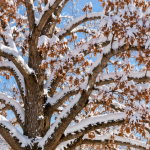
Winter is often the most physically damaging season for Ambler’s trees. Heavy, wet snow can accumulate on branches faster than a tree can shed it, adding significant weight that puts stress on limb unions, especially those already weakened by included bark or prior damage. Ice storms are even more concerning, since a coating of ice adds substantial weight along the entire length of a branch rather than settling in clumps the way snow often does. Evergreens with dense needle structure, like certain pines and spruces, can be especially vulnerable to snow load, while deciduous trees with weak-wooded species or included bark unions are more prone to ice-related limb failure.
Trees that already have structural weaknesses, such as co-dominant trunks or previously damaged limbs, are far more likely to fail under winter load than healthy trees with a sound structure, which is why fall inspections ahead of the first snow are so valuable.
Spring: Freeze-Thaw Stress and Saturated Soil
Spring in Ambler brings its own challenges, particularly the freeze-thaw cycles common in late winter and early spring, when daytime temperatures rise above freezing and night time temperatures drop back down. This repeated expansion and contraction can create cracks in bark and trunk tissue, giving pathogens and pests an easier entry point. Heavy spring rains also saturate soil, which can loosen root systems, particularly in trees with shallow or already compromised roots, making them more vulnerable to being uprooted in the wind events that often accompany spring storm systems.
Summer: Thunderstorms, Wind, and Drought
Pennsylvania summers bring a mix of risks that can seem contradictory: powerful thunderstorms with damaging wind gusts on one hand, and extended dry spells on the other. Summer thunderstorms are a leading cause of sudden limb failure, particularly for trees with a full, leafed-out canopy that catches more wind resistance than a bare winter tree would. The data from National Weather Service’s severe weather climatology for the Mid-Atlantic region shows this area regularly experiences damaging thunderstorm winds during the warmer months, which is worth factoring into any summer storm-prep routine.
At the same time, stretches of hot, dry weather can put trees under drought stress, which doesn’t always show visible symptoms right away. A tree weakened by drought often becomes more vulnerable to insect infestation or disease in the months that follow, meaning drought damage from July can show up as a health decline the following spring.
Fall: The Best Window for Prevention
Fall is generally the most important season for proactive tree care in Ambler, precisely because it comes right before the heaviest structural stress of winter. Cooler temperatures and lower humidity make this an ideal time for structural pruning, since removing weak, crossing, or damaged limbs before winter reduces the amount of surface area available for snow and ice to accumulate on.
Fall is also a good time to assess any cabling or bracing systems, confirm that drainage around the root zone is adequate, and identify any limbs that should be removed before the first significant snowfall rather than after a storm has already caused damage.
Ambler’s Local Landscape and Soil Conditions
Beyond the broader Pennsylvania climate, Ambler’s specific setting adds a few more variables to the mix.
- The area’s mature suburban tree canopy includes many large, decades-old oaks, maples, and sycamores, species that provide excellent shade but also carry more structural complexity and storm risk than younger, smaller trees.
- Ambler’s clay-influenced soils, common throughout much of southeastern Pennsylvania, drain more slowly than sandy soil, which means heavy spring and summer rain can leave root zones saturated for longer stretches, increasing the risk of root rot and reducing overall root stability during high-wind events.
- Older neighborhoods in and around Ambler also tend to have trees planted closer to homes, driveways, and utility lines than modern development standards typically allow, which raises the stakes when winter ice or summer storms threaten limb failure near a structure.
Common Species-Specific Weather Vulnerabilities in the Area
Certain species common to Ambler yards respond to Pennsylvania weather in distinct ways.
- Norway and silver maples have weaker wood, making them more prone to storm and ice damage than native oaks and hickories.
- Bradford pears, another once-popular ornamental, are notorious for splitting apart in wind or ice due to their naturally weak branch structure.
- White pines and other evergreens can suffer significant snow-load damage if not periodically thinned, while mature oaks, though generally strong, still require monitoring for included bark at major limb unions, a vulnerability that becomes especially relevant during ice storms.
How These Seasonal Patterns Affect Tree Care Planning
Because Ambler’s climate cycles through such distinct seasonal stresses, a tree care plan built around a single annual visit often misses problems that develop between visits. A tree that looked fine in a spring inspection can develop drought stress by August and enter winter more vulnerable than it appears. This is why an experienced tree service firm in Ambler, Pennsylvania recommends thinking about tree care as a seasonal cycle rather than a single yearly checkup, with different priorities depending on the time of year.
Cabanas Tree Expert helps Ambler homeowners protect their trees against the changing demands of Pennsylvania weather. Our team can identify weak limbs, structural defects, and other hazards that may worsen during snow, ice, wind, or heavy rain. We provide professional tree trimming services in Ambler, PA to reduce hazardous growth and improve overall tree structure before severe weather arrives. After storms, our team can safely remove fallen trees and damaged limbs from residential properties.
Cabanas Tree Expert also assesses trees for signs of weather-related stress and recommends appropriate care based on their condition. By combining seasonal inspections with timely maintenance, we help reduce preventable tree hazards throughout the year. Our local experience allows us to provide practical tree care suited to Ambler’s four-season climate.
Frequently Asked Questions About Pennsylvania Weather and Ambler Trees
What time of year is riskiest for trees in Ambler, PA?
Winter ice storms and heavy wet snow tend to cause the most sudden, severe limb damage, though summer thunderstorms are also a significant risk.
Can drought from earlier in the summer affect a tree months later?
Yes. Drought-stressed trees often become more vulnerable to pests and disease in the months following a dry spell, even after normal rainfall returns.
Should I prune my trees before or after winter?
Fall, before the first significant snowfall, is generally the best window, since removing weak or damaged limbs reduces the surface area available for snow and ice to accumulate on.
Do evergreens handle Pennsylvania winters differently than deciduous trees?
Evergreens can be more vulnerable to heavy snow load because they retain their needles year-round, while deciduous trees generally carry less winter weight but can be more prone to ice damage at weak limb unions.
How does freeze-thaw weather damage trees?
Repeated freezing and thawing can crack bark and trunk tissue, creating entry points for pests and disease that wouldn’t otherwise reach the tree’s internal tissue.
Are certain tree species more resilient to Pennsylvania’s weather?
Native species that evolved alongside the region’s four-season climate generally handle snow, ice, and storms better than non-native or poorly adapted ornamental varieties.
How often should Ambler homeowners have their trees inspected?
A fall inspection ahead of winter and a spring or early-summer check after storm season begins are generally enough to catch most developing issues before they become emergencies.
Are older trees near homes in Ambler more of a concern during storms?
Yes. Many mature trees in older Ambler neighborhoods were planted closer to structures than current standards recommend, which raises the stakes if a weak limb fails during a winter or summer storm.
Summary Checklist: Seasonal Tree Risks in Ambler, PA
| Season | Primary Risk to Watch |
| Winter | Snow load and ice accumulation on weak limb unions |
| Spring | Freeze-thaw bark cracking and saturated, unstable soil |
| Summer | Thunderstorm wind damage and prolonged drought stress |
| Fall | Best window for structural pruning before winter arrives |
| Year-round | Existing structural weaknesses compound seasonal stress |
| Any season | Schedule inspections timed to seasonal risk, not just once a year |
Final Advice
Have your trees inspected in the fall, before winter weather arrives, since this is the best window to address weak limbs before snow and ice put them to the test. Keep an eye on trees after any prolonged summer dry spell, since drought stress often shows up as decline months later rather than immediately.
Don’t ignore spring bark cracking or root heaving after a wet season, as these can be early signs of instability. Treat tree care as a year-round, season-by-season process rather than a single annual visit, and get a professional assessment after any significant ice storm or high-wind event.
Cabanas Tree Expert has helped Ambler homeowners navigate Pennsylvania’s demanding four-season climate for years, and our team is ready to build a seasonal care plan suited to your property’s trees.