July 20, 2026
Key Takeaways
- Heavy rain can expose hidden root decay, poor drainage, and weakened soil, making even healthy-looking trees more likely to fall during storms.
- Trees rarely fall because of wind alone; saturated soil dramatically reduces the ground’s ability to hold a root system in place.
- Root rot, girdling roots, and shallow root systems are often invisible above ground until a storm exposes the weakness all at once.
- Ambler’s mix of clay soils and older tree canopies creates conditions where water sits near root zones longer than it should.
- A tree that looks healthy in its canopy can still have a compromised root system underneath.
- Regular root zone inspections, especially before storm season, catch problems long before a tree becomes a falling hazard.
After a heavy summer storm rolls through Ambler, Pennsylvania it is common to see at least one large tree down somewhere in town, its root ball tipped up out of the ground like a saucer. Neighbors usually assume the wind did it. Often, the wind was just the final push. The real damage was already sitting underground, sometimes for years, waiting for saturated soil to finally give way. Understanding why trees fail during rain events, rather than during dry windstorms of similar strength, comes down to what is happening beneath the surface. Here is what Ambler homeowners should know about the hidden root problems that make heavy rain so dangerous for mature trees.
Why Rain Is More Dangerous Than Wind Alone
Soil holds a tree upright the same way concrete holds a fence post: through friction and mass. When soil is dry, that friction is strong. When soil becomes saturated with water, the particles separate slightly, reducing the soil’s grip on the root system. A tree that could withstand strong winds in dry conditions can topple in a much lighter storm if the ground underneath it has been soaked for days. This is why Ambler often sees more tree failures following multi-day rain events than during a single fast-moving windstorm. The soil simply has not had time to firm back up before the next gust arrives.
The Root Problems That Cause Trees to Fall During Heavy Rain
Several underlying root conditions make a tree far more vulnerable once soil becomes saturated, and most of them are invisible from a casual glance at the trunk and canopy.
1. Root Rot from Prolonged Moisture
Trees planted in low spots or areas with poor drainage are prone to fungal root rot, including conditions like Armillaria and Phytophthora, which slowly decay the structural roots responsible for anchoring the tree. A tree with root rot can maintain a full, healthy-looking canopy right up until the moment the compromised roots simply can no longer hold under wet, heavy soil.
2. Girdling Roots
Some trees, particularly those planted too deeply or in constrained urban and suburban lots, develop roots that wrap around the base of the trunk instead of spreading outward. These girdling roots choke the tree’s own vascular system over time and also reduce the spread of the root system, meaning less surface area anchoring the tree when soil becomes loose.
3. Shallow Root Systems
Species with naturally shallow root systems, along with trees growing in compacted soil or near pavement that blocks deeper root growth, rely on a wider but thinner root spread rather than deep anchoring roots. These trees are especially vulnerable once the topsoil layer becomes saturated, since that is exactly where their root mass is concentrated.
4. Construction and Grade Changes
Trees that have had soil added or removed near their base during past landscaping or construction work often have compromised root systems that are not immediately visible above ground. Added soil can suffocate roots over time, while excavation nearby can sever major structural roots, both of which show up as instability only once heavy rain saturates what root structure remains.
Why Ambler’s Conditions Make This More Common
Ambler and the surrounding Montgomery County area feature a mix of clay-heavy soils in parts of town, which drain more slowly than sandy or loamy soil. Combined with a mature tree canopy in many established neighborhoods, this means root zones frequently sit in saturated conditions for longer stretches after heavy rain than they would in areas with better-draining soil. Older trees with decades-old root systems are also more likely to have accumulated some combination of the issues above, simply from age and years of changing conditions around their base.
Warning Signs to Watch For Before the Next Storm
Homeowners do not need to wait for a storm to check for risk. Signs worth investigating include:
- soil that noticeably lifts or cracks near the base of the trunk, especially after wind
- mushrooms or fungal growth at the tree’s base or over its root zone
- a canopy that has thinned or yellowed without an obvious cause
- visible leaning that has developed or worsened over recent seasons; and
- standing water that consistently pools near the trunk after rain rather than draining away.
Any one of these signs on its own may not mean immediate danger, but they are worth a professional look, particularly on large trees positioned near a house, driveway, or area where people regularly walk or park.
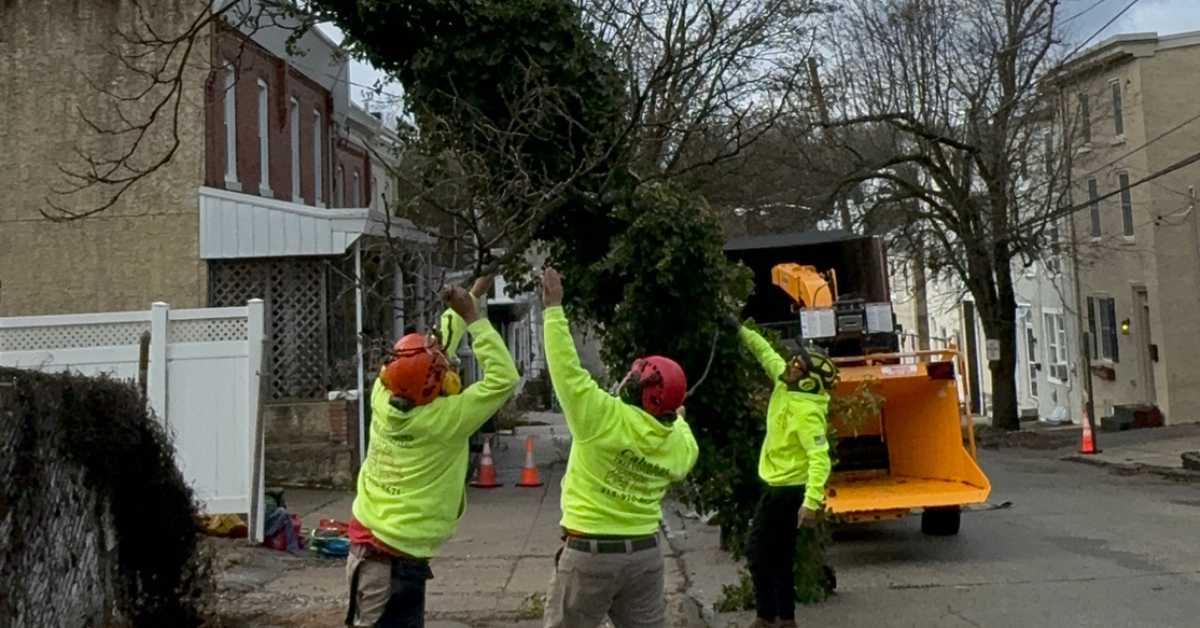
Cabanas Tree Expert has been assessing root health and storm risk for homeowners throughout Ambler, Horsham, and Willow Grove for years, combining 25 years of team experience with ISA and TCIA-certified arborists on staff. Our team offers free on-site estimates and root zone inspections designed to catch girdling roots, root rot, and drainage problems before they become an emergency, along with 24/7 emergency tree service and crane-assisted removal for trees that have already become unstable. As a licensed, bonded, and insured family-owned company, they also handle storm cleanup and insurance coordination when a tree does come down.
Frequently Asked Questions About Trees Falling in Heavy Rain
Not necessarily. Root rot and girdling roots can progress for years while the canopy above ground continues to look full and green, which is why root zone inspections matter even for trees that appear healthy.
Yes, species with naturally shallow or wide-spreading root systems tend to be more vulnerable in saturated soil compared to species with deep taproots, though soil conditions and site history matter just as much as species.
Any large tree positioned close enough to hit your home, driveway, or a frequently used area is worth a professional look before a major storm, especially if it shows any of the warning signs like leaning or fungal growth at the base.
It depends on the degree of lean, how recently it developed, and the condition of the roots on the side opposite the lean; an arborist assessment can determine whether cabling, soil correction, or removal is the right path.
Keep people and vehicles away from the area, avoid attempting to straighten or stabilize the tree yourself, and contact a professional tree service promptly for an assessment, since a shifted tree can fail completely with very little additional force.
Summary Checklist: Storm-Related Root Risk
| Situation | Risk Level | Recommended Action |
| Mushrooms or fungal growth at tree base | High | Schedule a professional root health inspection |
| Standing water pooling near trunk after rain | Moderate to High | Improve drainage and monitor tree stability |
| Newly developed or worsening lean | High | Get an immediate arborist assessment |
| Tree near constrained soil or pavement | Moderate | Evaluate root spread and soil compaction |
| Recent grade change or construction nearby | Moderate to High | Check for root damage or suffocation |
Final Advice
Heavy rain doesn’t create tree problems. It simply exposes weaknesses that have often been developing below the surface for years. Hidden issues such as root rot, girdling roots, poor drainage, or soil compaction are the major culprits which leaves even healthy-looking trees vulnerable when the ground becomes saturated. Waiting until a tree begins to lean or falls during a storm can lead to costly property damage, emergency removals, and serious safety risks. Hiring a dedicated tree service firm in Ambler, PA will allow homeowners to conduct regular inspection of the root zone, especially on mature trees near structures. This is the most effective way to catch these hidden issues before they become emergencies. An experienced arborist can identify early warning signs that are impossible to spot from the canopy alone and recommend solutions before they become emergencies.
Preventive maintenance is almost always more affordable than dealing with storm-related damage. If you live in Ambler, Horsham, Willow Grove, or the surrounding communities, scheduling a root health and storm-risk assessment before severe weather arrives is a smart investment in your property’s safety. For a free root health assessment or storm risk inspection contact Cabanas Tree Expert at (215) 978-9827.
Reviewed by Certified Arborist
Cabanas Tree Expert Editorial Team
This article has been reviewed by certified arborists to ensure accuracy with tree risk assessment and root health evaluation.
Sources and Credible References
- International Society of Arboriculture (ISA)
- Science Direct – Soil Saturation
- Britannica – Windstorm
- Science Direct- Armillaria
- Oregon State University – Phytophthora
- Tree Care Industry Association (TCIA)
- Penn State Extension: Tree Care
- USDA Forest Service: Urban Forests
- Pennsylvania Department of Conservation and Natural Resources